Stara Varoš ist eine oder zwei Stunden zu Fuß im alten Viertel statt einer Fahrt, aber es ist der Teil Podgoricas, der sich zwischen den längeren Touren, für die ein Mietwagen eigentlich da ist, am meisten lohnt. Die Gassen sind eng und werden am besten gelaufen, lassen Sie das Auto also stehen; dieser Führer nennt Parkmöglichkeiten am Rand des Viertels und was Sie darin finden.
Der älteste Teil einer jung wirkenden Stadt
Das meiste in Podgorica ist moderner Beton, die Stadt wurde zwischen 1943 und 1944 von über siebzig alliierten Luftangriffen dem Erdboden gleichgemacht, und fast das ganze Zentrum wurde in jugoslawischer Zeit neu gebaut. Stara Varoš, das alte osmanische Viertel am Nordufer der Ribnica, ist die wichtigste Ausnahme. Seine niedrigen Häuser, krummen Gassen und zwei erhaltenen Moscheen sind das einzige nennenswerte Vorkriegsstraßenbild, das der Hauptstadt geblieben ist.
Fünf Jahrhunderte lang war Podgorica eine osmanische Grenzstadt, Teil des Sandschaks Scutari (Shkodra). Die Osmanen nahmen sie 1474 und hielten sie bis 1879, als der Berliner Kongress sie dem Fürstentum Montenegro zusprach. Stara Varoš war der muslimisch-osmanische Kern; das benachbarte Viertel Drpe bewahrte die orthodoxen Häuser. Heute sind beide schlicht Wohnviertel, doch Stara Varoš liest sich noch immer als eine andere Art Ort.
Die Sahat Kula, der Uhrturm
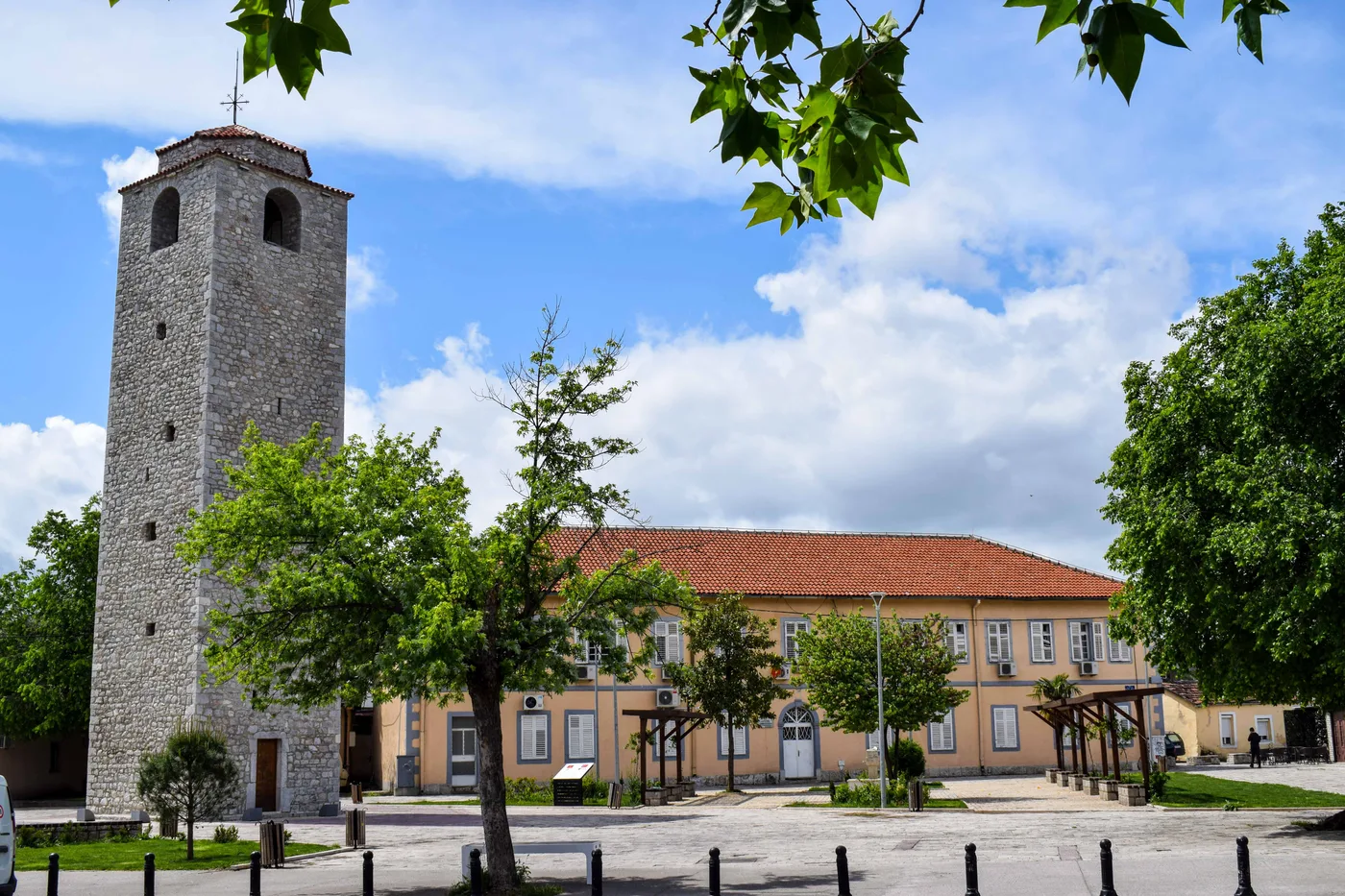
Das Herzstück des Viertels ist die Sahat Kula, ein steinerner Uhrturm am Platz Bećir-bega Osmanagića. Er ist 19 Meter hoch, wurde im 17. Jahrhundert von der Familie Osmanagić errichtet und gehört zu den ältesten erhaltenen Bauwerken der Stadt. Das Zifferblatt stammt aus dem späten 19. Jahrhundert und wurde aus Italien gebracht. Der Turm selbst ist für die Öffentlichkeit geschlossen, doch er steht auf einem kleinen offenen Platz voller Cafés, dem besten Ort, um eine halbe Stunde zu sitzen und den Stein anzusehen, wegen dem Sie gekommen sind.
Die Osmanagić-Moschee
Hundert Meter westlich des Uhrturms steht die Osmanagić džamija (Osmanagić-Moschee), ebenfalls aus dem 17. Jahrhundert, gestiftet von Hadži Mehmed-paša Osmanagić. Sie ist klein, geweißt und weiterhin aktiver Gebetsort, die größere der zwei erhaltenen Moscheen der Stadt. Kleiden Sie sich zurückhaltend, wenn Sie eintreten, und ziehen Sie die Schuhe aus; Gottesdienste haben Vorrang vor Besuchen.
Etwas weiter Richtung Fluss liegt die kleinere Starodoganjska-Moschee, ebenfalls aus osmanischer Zeit. Beide sind nach den Maßstäben Istanbuls oder Sarajevos bescheiden, keine großen Kuppeln, keine hohen steinernen Minarette. Der osmanische Fußabdruck in Podgorica war immer provinziell.
Ribnica-Brücke und die alte Festung
Am Südrand von Stara Varoš mündet die Ribnica in die Morača. Die Ribnica-Brücke hier ist eine einbogige Steinbrücke aus osmanischer Zeit, kurz, niedrig und leicht zu übersehen. Daneben, auf dem Landkeil zwischen den beiden Flüssen, liegen die Ruinen der Festung Ribnica. Erhalten ist wenig, ein paar Meter Mauer, Bogengewölbe, viel Brombeergestrüpp, doch der Ort ist schön, mit der Morača in einer flachen Schlucht direkt darunter. Der zerfallene Steinbogen ist der meistfotografierte Winkel des Viertels.
Die Überlieferung sieht hier den Geburtsort von Stefan Nemanja, dem Begründer der serbischen Nemanjić-Dynastie im 12. Jahrhundert, geboren um 1113, als die Siedlung Ribnica hieß. Ob das wörtlich stimmt oder nicht, der Platz war von der Römerzeit bis in die osmanische Epoche durchgehend befestigt.
Durch die Straßen gehen
Stara Varoš ist klein, den Kern gehen Sie ohne Eile in 40 Minuten ab. Die Straßen, denen man folgt, sind Marka Miljanova (die Achse), Svetozara Markovića und die Gassen hinunter zu den Flüssen. Die Häuser sind meist ein- bis zweigeschossig, einige mit auskragenden Obergeschossen und ummauerten Höfen, ein typisch balkanisch-osmanisches Muster. Ein paar wurden als Cafés und kleine Galerien hergerichtet; in vielen wird schlicht gewohnt.
Mehrere alte čevabdžinice (Grillfleischlokale) und Bäckereien liegen hier und sind ein besseres Mittagessen als alles in der neuen Stadt. Ćevapi, Pljeskavica, Burek aus dem Holzofen. Die Preise sind spürbar niedriger als in den gläsernen Cafés an der Hercegovačka.
Parken und Anfahrt
Das Viertel ist überwiegend begehbar. Hineinfahren geht, doch die Gassen sind eng und Einbahnstraßen. Leichtere Optionen:
- Bulevar Džordža Vašingtona, der Boulevard am Südufer der Ribnica. Gebührenpflichtiges Straßenparken, Zahlung am Automaten oder per SMS. Zwei Minuten über die Fußgängerbrücke.
- Delta City und die Parkhäuser der Malls liegen zu weit westlich, nutzen Sie sie nicht für Stara Varoš.
- Bereich Trg Republike, 10 Minuten zu Fuß, teurer, aber bewacht.
Das Zonenparken im Zentrum Podgoricas ist montags bis samstags etwa von 07:00 bis 21:00 kostenpflichtig; sonntags ist es in den meisten Zonen frei. Die Tarife sind moderat.
Dies ist das stärkste Argument der ganzen Seite für das kleinste Auto, in das Ihr Gepäck passt: ein Stadtauto oder ein Economy-Hatchback ist günstiger zu mieten, günstiger zu tanken und weit leichter am Rand des Viertels abzustellen. Prüfen Sie die Selbstbeteiligung, bevor Sie einen Mietwagen in derart enge Straßen bringen, denn Bordstein- und Mauerschäden sind genau das, wofür die Deckung da ist, und schauen Sie, ob bei der Übernahme eine Kaution einbehalten wird. Mietwagen im Stadtzentrum lassen sich innerhalb der Stadt liefern, und eine Automatik nimmt den Stop-and-go-Straßen ringsum die Arbeit ab.
Wann Sie kommen sollten
Früh am Morgen oder in der Stunde vor Sonnenuntergang. Die Mittagszeit im Juli und August ist hier brutal, Podgorica erreicht im Sommer regelmäßig 40 °C, und Stara Varoš hat auf seinen offenen Plätzen fast keinen Schatten. Das Licht am Uhrturm ist von Osten gegen 08:00 und von Westen gegen 19:00 am besten.
Wenn das alte Viertel nur ein Halt auf einer größeren Reise ist, führt die Seite Abholpunkte in ganz Montenegro auf, wo Sie sonst übernehmen und zurückgeben können, einschließlich eines Einwegabschlusses an der Küste.
Auf einen Blick
Parken und das Auto, das Sie im alten Viertel wollen
Die Gassen hier sind das engste Fahren der Stadt, und es ist nichts damit gewonnen, ein Auto hineinzubringen. Parken Sie am Rand des Viertels, in den gebührenpflichtigen Zonen von Montag bis Samstag, und gehen Sie hinein. Das macht dies zu einem seltenen Teil Podgoricas, in dem die kleinste Klasse nicht nur günstiger, sondern wirklich nützlicher ist, und der Großteil des Angebots ist Automatik, was in den Einbahnstraßen der Anfahrt hilft.