La plupart des sorties à la journée au départ de Podgorica commencent de la même façon, un café et un plein avant que la chaleur ne monte, et la capitale réussit ses matinées. Voici la version pratique : où les habitants prennent leur espresso, où se garer sans amende, et où attraper un burek avant de pointer la voiture vers la côte ou la montagne. Cela vaut aussi bien si vous récupérez la voiture de location ce matin-là que si elle vous attend déjà à l'hôtel.
Pourquoi la matinée compte à Podgorica
Podgorica est chaude. Les maxima d'été dépassent régulièrement 38 °C et peuvent approcher les 45 °C en juillet et en août ; la ville occupe une cuvette basse entourée de montagnes et ne se refroidit pas vite. Résultat pratique : l'essentiel de la vie en plein air se déroule avant 11h00 et après 19h00. Une bonne matinée cadre ici toute la journée, prenez le café, prenez de quoi manger, et sortez de la ville avant la chaleur.
La culture du café
La culture du café monténégrine tient plus de l'italienne que de l'anglo-saxonne, l'espresso est court et fort, bu assis, souvent sur 40 minutes de conversation plutôt qu'à emporter. Commandez un espresso ou un kafa. Un macchiato est en général un petit espresso avec un nuage de mousse de lait. Un domaća kafa (café local, à la turque) est non filtré, préparé dans un džezva, et arrive avec le marc au fond de la tasse, attendez une minute avant de boire.
Les prix sont bas selon les critères européens, un espresso simple coûte en général de 1,20 à 1,80 euro, même dans les rues piétonnes bordées de terrasses.
Où s'asseoir
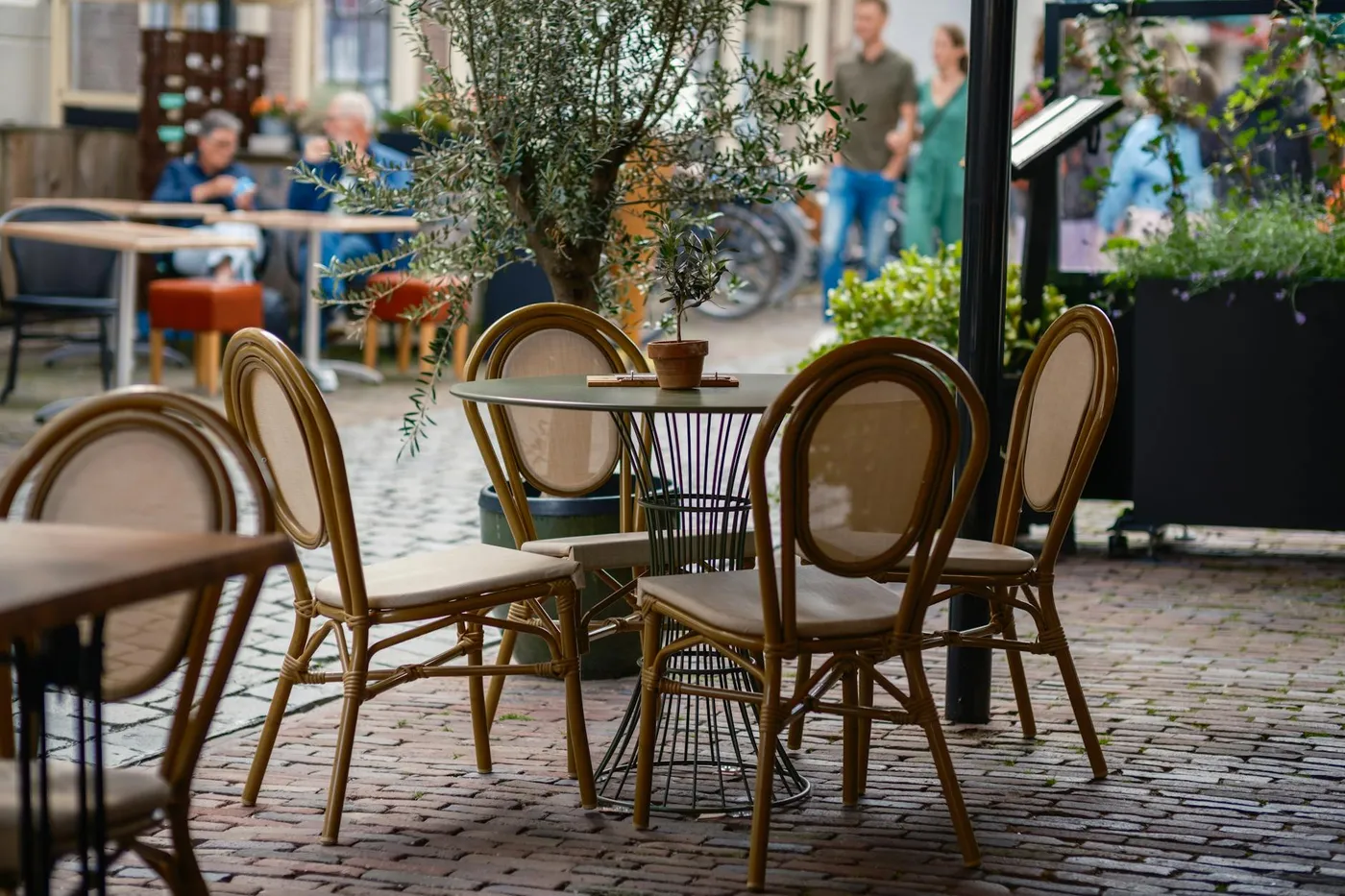
- Hercegovačka, la principale rue piétonne des cafés. Beaucoup de terrasses, bien ombragées le matin. Le choix par défaut. On commande à table.
- Trg Republike, de plus grandes terrasses autour de la place principale, parfaites pour observer les passants. Tarifs un peu plus touristiques.
- Stara Varoš, une poignée de petits cafés autour de la place de la tour de l'horloge Sahat Kula. Plus calme, plus local, clientèle plutôt plus âgée. Une autre ambiance que la ville neuve.
- Le long de la Morača, la rive près du pont du Millénaire compte plusieurs cafés en terrasse, ombragés le matin, avec une bonne brise.
Le burek et la tournée de la boulangerie
Le burek, une fine pâte filo garnie de viande, de fromage, d'épinards ou de pommes de terre, cuite en plaque ronde et vendue à la part, est la street food matinale par excellence. Un bon burek sort brûlant du four et s'accompagne d'un gobelet de yaourt à boire (kiselo mlijeko). Toute boulangerie dont on voit le four est un pari raisonnable ; les petites boulangeries de Stara Varoš valent en général mieux que les chaînes lustrées de la Hercegovačka.
Les autres classiques du matin : la pita (terme plus large pour la même famille de feuilletés), les krofne (beignets frits), le kifla (un petit croissant de pain). Le burek coûte en général de 1,50 à 2,50 euros la part.
Le marché, Pijaca
Le marché de produits frais (Gradska pijaca) se trouve près de la gare routière principale, à l'est du centre. Ouvert le matin, le plus animé le samedi. On y vend fruits et légumes de saison de la plaine de Zeta, fromage et jambon de fabrication maison, du miel et, à l'automne, des cageots de grenades de Crmnica. Prévoyez des petites coupures en euros et un sac. Un arrêt ravitaillement parfait si vous partez à la montagne pour la journée.
Le stationnement, les règles
Le stationnement en voirie dans le centre de Podgorica est zoné. Trois points pratiques :
- Les zones rouge, jaune et bleue sont payantes du lundi au samedi, environ de 07h00 à 21h00. Le dimanche est en général gratuit dans la plupart des zones, vérifiez le panneau.
- Payez à l'horodateur ou par SMS depuis un téléphone local ou en itinérance. Les instructions figurent sur l'horodateur.
- Les amendes tombent régulièrement. Une voiture immobilisée par un sabot vous coûte une demi-journée, payez donc les 0,50 à 1,00 euro de l'heure et passez à autre chose.
Si vous passez la matinée à marcher dans le centre, utilisez un parking gardé (Trg Republike, Delta City) ou garez-vous en bordure des zones, du côté de Kruševac, et rentrez à pied.
Pour un séjour centré sur le centre-ville, louez la plus petite voiture qui accepte vos bagages : elle se glisse dans les courtes places que laissent les boulevards et coûte le moins cher à l'usage. Une boîte automatique vaut son petit supplément si le voyage se joue surtout en conduite urbaine, et le kilométrage illimité pèse moins sur une location en ville que la caution et le niveau de couverture. Location de voiture à Podgorica ville peut être livrée à une adresse en ville, vous sortez donc de l'hôtel pour rejoindre la voiture au lieu de commencer à un comptoir d'aéroport, et la caution ainsi que les conditions de kilométrage sont indiquées par annonce.
Sortir proprement de la ville
L'heure de pointe du matin à Podgorica court à peu près de 07h30 à 09h00 en semaine. Les goulots d'étranglement sont les ponts sur la Morača. Si vous montez vers le nord (Nikšić, Durmitor, canyon de la Morača), partez avant 08h00 ou après 09h30. Vers le sud (aéroport, lac de Skadar, Bar) c'est en général plus fluide, mais le rond-point de la sortie aéroport peut saturer.
Si le café n'est que le prélude à un plus long voyage, il vaut la peine de savoir ce que le reste du pays demande à la voiture avant d'en choisir une : louer une voiture partout au Monténégro couvre les étapes côtières et les montées du nord, qui tirent en sens inverse sur la taille et la boîte de vitesses.
Payer le café
- Les cartes passent largement dans les cafés du centre et les chaînes, le sans contact est la norme.
- Les petites boulangeries et les étals du marché sont souvent en espèces uniquement. Gardez quelques euros en petites coupures.
- Arrondir est le pourboire d'usage ; un pourcentage complet n'est pas attendu mais reste apprécié pour un vrai petit-déjeuner attablé.
En bref
Si le café ouvre une journée de route
Les horaires ci-dessus sont la partie utile pour qui a une voiture : sortir de la ville avant huit heures ou après neuf heures et demie évite le trafic des écoles et des bureaux, et un jour d'été cela vous achète aussi les heures fraîches à l'autre bout. Une voiture livrée à votre hôtel la veille au soir rend la chose simple, ce que font la plupart des voitures ici sans frais, et cela vaut mieux que de commencer la matinée par un aller jusqu'au comptoir de l'aéroport. Le stationnement en zone est payant du lundi au samedi et gratuit le dimanche, un arrêt café avant un départ matinal ne coûte donc rien le week-end.